
 |
 |
 |
 |
 |
 |
 |
 |
 |
 |
 |
 |
 |
 |
 |
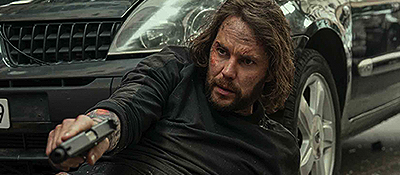


Only one goal matters: survival. Taylor Kitsch and Betty Gilpin star in American Primeval, a gripping new limited series from director Peter Berg. Coming Jan. 9, only on Netflix.


Gallery Link:
Movies/TV Shows and Other Projects > American Primeval (2025)
The limited series premieres on Netflix January 9, 2025.
The Netflix limited series forced its stars to do things they’d never done before: “I’m sure my liver is in my throat and my small intestine is in my ankle. Things have been rearranged in a way that will never go back together.”
Peter Berg did not use words when describing his vision for American Primeval. Mark L. Smith, the writer best known for The Revenant, walked into Berg’s office preparing to discuss a survival show in the vein of the 1972 Robert Redford Western, Jeremiah Johnson. Instead, Berg showed Smith a Stiletto ice axe—and nothing else. “Can we do this as a show?” Berg asked. Smith smiled, said yes. As Berg explains it, “We wanted to make a show that required us to go into the elements.”This turned out to be a bit of an understatement. Their breathless new Netflix miniseries demanded a 145-day shoot way up in the New Mexico mountains—“at altitude in the weather, with wolves and bears and snakes,” Berg says. “Films like this cheat, and go into sound stages or parking lots and use green screens. We were all very excited to not do that. It required getting up very early, four o’clock in the morning, driving an hour and a half outside of Santa Fe to different pieces of land, oftentimes different reservations that we were filming on—and setting up in the dark when it was extremely cold.”
Berg needed to quiz his cast before hiring them: “Are you in physical shape? Are your knees good? Are your ankles good? Is your back okay?” They were given a month of “cowboy camp,” learning to ride horses in three feet of snow. Still, one star, Taylor Kitsch, broke his foot by the second episode and was in a boot for six weeks. His colead, Betty Gilpin, still thinks about filming intense action scenes on horseback while in a corset for months on end. “Anytime one of the guys would start to complain about being uncomfortable in their costume, my hand would rise to their trachea,” she says. “I’m sure my liver is in my throat and my small intestine is in my ankle. Things have been rearranged in a way that will never go back together.”
Such visceral, violent realism helps set American Primeval, premiering January 9, apart. The show is inspired by real events, as the clashing ambitions and fears of different groups in the American West circa 1857 come to an explosive head. “It was a very lawless, wild spot in America,” Berg says.
Helming all six episodes of American Primeval, Berg settled on the Mountain Meadows Massacre as the series’ inciting tragedy. The first episode recreates the murder of hundreds of pioneers traveling from Missouri at the hands of Mormon soldiers, under orders from church president Brigham Young. This occurs as Indigenous nations including the Southern Paiutes of Utah and the Northwestern Shoshone fight for survival and security in the same territory the Mormons are encroaching on.
We learn of these warring cultures through a relatively intimate, if plenty fraught, dynamic: a mother named Sara (Gilpin), who’s searching for her husband and trying to keep her young son alive amid the bloodshed, with a grieving local named Isaac (Kitsch) enlisted to help guide her to safety.
Kitsch, whose working relationship with Berg goes back decades to the Friday Night Lights pilot, signed onto American Primeval instantly. For starters, Isaac felt like “a once-in-a-lifetime role.” Kitsch lost about 25 pounds in the lead-up to filming, and otherwise spent a full year preparing. When Berg first called about the project, Kitsch was showing his brother his new property in Bozeman, Montana. In other words, American Primeval was meeting the actor at home. “He prefers to spend his time tracking wolves with his camera to running around New York City or Hollywood or any of that kind of stuff,” Berg says.
The demands of the role also introduced Kitsch to a set of traditions he’d never encountered before. We meet Isaac after he’s essentially lost everything he cares about: He was raised on a Shoshone reservation after being sold off as a young child. “It’s not just this American that’s lost his family—you have this whole intertwining relationship with the Native community that he’s more loyal to than anybody else,” Kitsch says. “Anytime you’re taking on a culture, you’ve got to do your best to get it right—and it’s tough because I didn’t have much time with them, so I’m getting into these very intense questions early. That took a bit, for them to trust me.”
In addition to learning the language, Kitsch worked with a shaman that he still practices with today. He experienced Native sweats and is now planning to build one on his own property. “Everything is circular with them and there is no ending, which I think is incredibly beautiful,” he says. “The spiritual side of myself was opened up through this process. I lost my father while we were shooting this, and that helped me a lot. To have that access that I would never have had if I had not done this job was, I think, meant to be.”
There’s one harrowing sequence in American Primeval that Gilpin offered to help shape. She and Berg spoke extensively about how to approach it in the script. “She basically wrote what I thought was a very powerful scene,” Berg says. “I don’t know that there are many actors that could have done that: (a) perform it the way she performed it, and (b) really be deeply involved in creation and finding the words to help get the character out of that spot.”
Gilpin was all-in on Berg’s gritty vision, and found Kitsch an inspiring scene partner, with their heated push-and-pull dynamic anchoring the series amid the brutal surrounding bloodshed. “He’s fluent in the Shoshone language, basically,” she says. “It was so impressive and so rare. When your scene partner is that invested, it just makes you step up.” And she felt a vital alignment with Berg’s philosophy for the series, which was simply: Make it feel real.
“We wanted to be really true to 1857, and paint a real picture of what it must have been like for a woman who was raised in a society that told her, ‘Okay, your job is to sit in a pretty dress and write a letter and then go to sleep, or wait for people to visit you and get married. And die reading a pearl-embossed Bible in a bubble,’” Gilpin says. “There’s a tendency to want to make female characters like Sara badass and fearless. I think that just does a disservice to the history of what people went through.”
And indeed, the violence on American Primeval is unrelenting—bloody, messy, unusually graphic. “We wanted to try and achieve a certain level of intensity,” Berg says. “It’s not stylistic and visually appealing. It’s in your face and hard-hitting, which felt true to the time period—and certainly true to the story that we wanted to tell.” Characters kill each other with immediacy—but those moments are always rooted in a nuanced historical approach. With the Mormon storyline, for instance, Smith’s scripts illustrate how the group got to Utah in the first place, posing the question of why they committed that massacre before setting off a kind of free-for-all in the West.
The violence committed by Paiutes and Shoshone characters was also rooted in authenticity—however unpleasant. “I don’t believe in changing history. It was a violent time,” says Julie O’Keefe, an indigenous consultant on American Primeval who previously worked on Killers of the Flower Moon. “When I think of all the stories that are out there, 574 tribes plus hundreds of thousands of stories, they’re all violent. What happened in particular with the community that I am a part of and what was done to us, I think that this is an authentic portrayal. People shouldn’t necessarily have anything sugarcoated.”
There’s no risk of that on American Primeval. “Cut to day two, you’re like, Goddamn, did we really sign up for this?” Kitsch says. “But that kind of stuff I love and live for. There’s no acting required. You’re genuinely just freezing your ass off and fighting for your life.”
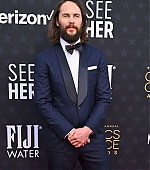
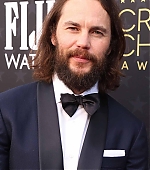
Taylor was in attendance for the 29th Annual Critics Choice Awards and photos from the red carpet have been added into the photo gallery.


Gallery Link:
Public Appearances > 2024 > January 14: 29th Annual Critics Choice Awards
The actor, who stars in Netflix’s ‘Painkiller,’ tells THR about his time away from the spotlight — spent building a healing retreat for veterans and people battling addiction.
When Taylor Kitsch signs on to the Zoom call to discuss his new charitable endeavor in rural Montana, he looks very much the part. The 42-year-old, clad in a T-shirt, is perched in the driver’s seat of his adventure van, fresh from a supply run for the geodesic dome he’s building. It looks like the kind of setting where it might be a miracle to even have a cell signal.Two years ago, after selling his onetime dream lake house in Austin, Texas, the actor drove this same van 20 hours north to Bozeman, Montana, where he rode out part of the pandemic. He was attracted to the area because of his interest in wildlife photography and a yearning for more serenity, but once his real estate agent showed him a particularly stunning piece of land (which he first visited in waist-deep snow), he had a vision of a nature retreat that could offer healing to people in need. He got to work.
Now, he’s deep into building an A-frame house (which will serve as the central meeting space), as well as cabins and that dome on the property. Kitsch’s excitement about the project is palpable, and he’s prone to giddy non sequiturs about his plans. “I’m just rambling,” he says with a laugh five minutes into the interview, after chattering fervently about everything from baby fox sightings and a new idea for an outdoor shower to the ice baths his crew has been conducting in the soon-to-be wood-burning hot tub. “I’m just really excited about this, about it being a base camp for people to empower themselves.”
Kitsch is interested in helping all sorts of people, but his plans revolve around the veteran and sober/recovery communities. He has been focused on veterans’ issues since he became close with retired Navy SEAL Marcus Luttrell while collaborating on a film a decade ago, and has even recruited several of the Marines he met along the way to help during the building stage. (“With my limited skills, I’m more of a runner,” Kitsch says with a laugh. “Consider me sort of the first AD.”) His desire to help those dealing with addiction comes from a personal place: It runs in his family, and he took time away from the spotlight last year to support a close relative’s sobriety. “The stakes were very life-and-death, and Marcus was one of the few people I called for help,” he says. “When you get into that community, it’s like you’re a brother for life, and it’s really beautiful.”
So far, “every fucking nickel” of the project’s budget has come out of Kitsch’s own pocket, but he feels grateful to be able to contribute. He says he feels lucky that he found a charitable passion, and a place to call home that is far removed from Los Angeles. “I got a later start in the business, and I was able to have a sense of who I was and what I needed,” says the Terminal List and Friday Night Lights actor. “Being in L.A. was never a great thing for me, and I love being out here — there’s just so much peace to grasp. That’s what this place represents to me: It’s not going to solve every problem, but hopefully it will help at least one person work toward what they need.”
The Friday Night Lights alum digs deep to play a man addicted to opioids in the new limited series.
For Taylor Kitsch, joining the cast of the scripted limited series Painkiller was a “no-brainer” for several personal reasons. One, it was another chance to collaborate with executive producer and director Pete Berg, who worked with Kitsch on his breakout role as Tim Riggins in the 2006 football drama Friday Night Lights.“He’s like an older brother to me,” Kitsch said of Berg on the set of Painkiller in early 2022, prior to the SAG-AFTRA strike. “We’ve been through a lot, and when I got this call, it was quite simple, to be honest.” After Friday Night Lights, Kitsch and Berg teamed up on the 2012 blockbuster Battleship and again on 2013’s Lone Survivor. “You already have that trust,” said Kitsch, “and the shorthand is really important as well.”
That trust was necessary in grappling with the heavy subject matter of Painkiller, a fictionalized retelling of some of the origins of the opioid epidemic that is believed to have caused over 300,000 American overdose deaths over the last two decades. The six-episode series hones in on an ensemble of characters to tell a broader story: Richard Sackler (Matthew Broderick), the billionaire senior executive at Purdue Pharma who pushes the wide distribution of opiates for profit; Edie Flowers (Uzo Aduba), an investigator at the US Attorney’s office who chases down answers about OxyContin; Shannon Schaeffer (West Duchovny), a recent college grad who’s recruited to Purdue to sell the drugs directly to doctors; and Glen Kryger (Kitsch), a mechanic who, after getting injured on the job, is prescribed OxyContin, which traps him in a vicious cycle of addiction.
Although Glen is a wholly fictional character, he’s the series’ main face of OxyContin’s devastating effects — another reason why Kitsch felt a personal responsibility in portraying Glen’s struggle. Kitsch has watched people close to him fight addiction. “Man, it’s pretty close to me, this thing,” he said. “Unfortunately, I think we’re all one degree away from someone who’s an addict.”
Authentically capturing Glen’s attempts at detoxing as he hides the seriousness of his addiction from his wife Lily (Carolina Bartczak) and stepson Tyler (Jack Mulhern) required some creative risk-taking from both Kitsch and Berg. Berg’s directing style, which Kitsch knows well, is dynamic and at times improvisational to keep the performances raw and real. “Sometimes he tries to get you out of your own head or your own way,” said Kitsch. “You don’t get faulted for mistakes — he just pushes you left or right. He keeps the set very alive and you move quick.”
The conversation about the opioid epidemic is far from over, as everyone involved in Painkiller understands, and Kitsch hopes his portrayal of Glen helps continue the conversation and remove some of the stigma and shame about addiction. “I’m very lucky to have served a lot of true stories and heavy things,” said Kitsch. “And this is right up there for me in the sense of purpose, of why I get to do what I do.”
Painkiller is now streaming on Netflix.

Gallery Link:
• Movies/TV Shows and Other Projects > Painkiller (2023) > Episode Stills
Netflix has officially announced the release of the limited series Painkiller. All six episodes will begin streaming August 10th.
Along with the release date, Netflix has released the series synopsis:
A fictionalized retelling of events, PAINKILLER is a scripted limited series that explores some of the origins and aftermath of the opioid crisis in America, highlighting the stories of the perpetrators, victims, and truth-seekers whose lives are forever altered by the invention of OxyContin. An examination of crime, accountability, and the systems that have repeatedly failed hundreds of thousands of Americans, PAINKILLER is based on the book PAIN KILLER by Barry Meier and the New Yorker Magazine article ‘The Family That Built the Empire of Pain’ by Patrick Radden Keefe.
The series also stars Matthew Broderick, Uzo Aduba, Dina Shihabi, West Duchovny, and John Rothman.